A Parent’s Guide to Disability Benefits for Children: DLA, Carer’s Allowance, UC and More
1. Introduction
It took me a long time to apply for any kind of disability benefits for me or my kids. The whole process seemed so incredibly daunting and overwhelming, plus the likelihood of actually being awarded them seemed very low. I very much was given the impression the system was set-up to make it as difficult as possible for you to be awarded disability benefits. In some ways, I do think this is true. When it comes to PIP (Personal Independence Payments; disability benefits for those aged 18 and over), the paperwork is mountainous, there are a lot of hurdles to jump through and there is a great deal of evidence that assessors have written down the opposite of what claimants actually told them. You need the energy and cognitive function in order to tackle the scary task of the form and so many people with disabilities just don’t have the reserves to do this.
HOWEVER. Please don’t be put off. Applying for disability benefits for your children is a great deal easier and there is a lot of help out there (side note: there’s a lot of help out there to apply for PIP too. Please do seek it out if you qualify).
I think a lot of parents think, ‘I shouldn’t apply, I don’t need it.’ Or don’t feel it’s fair for them to claim it. But I’m sure if you are reading this, you know having children with disabilities comes with a lot more expense. Special clothing without seams, large size specialist nappies for incontinence, sensory equipment, supplements, private therapy, home adaptations, communication aids, safety equipment and the list goes on and on. This is what DLA is for.
I’ve had the good fortune to have extremely helpful and knowledgeable friends (you know who you are ❤️) who have urged me to apply and guided me through the process of applying for disability benefits and it has made a big difference to our lives and eased our financial worries.
In this blog post, we’ll cover various disability benefits, including Disability Living Allowance (DLA), Universal Credit (UC), Carer’s Allowance and various discount/access cards.
2. Applying for Disability Living Allowance (DLA) for Your Child
What is DLA?
Disability Living Allowance is a disabilty benefit to help with the extra costs of looking after a child under 16 with a disability or health condition.
Eligibility Basics
Your child must need more care, supervision, or mobility support than a child of the same age without a disability.
You DO NOT need a diagnosis to be awarded DLA; DLA is awarded based on the extra care and supervision your child needs.
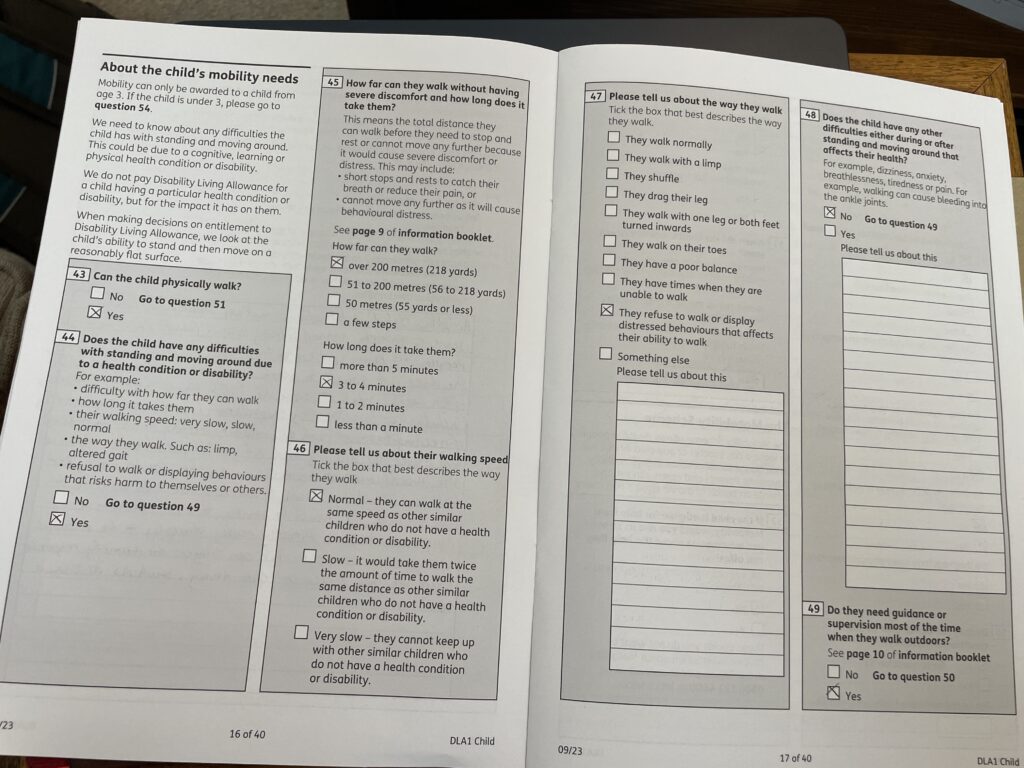
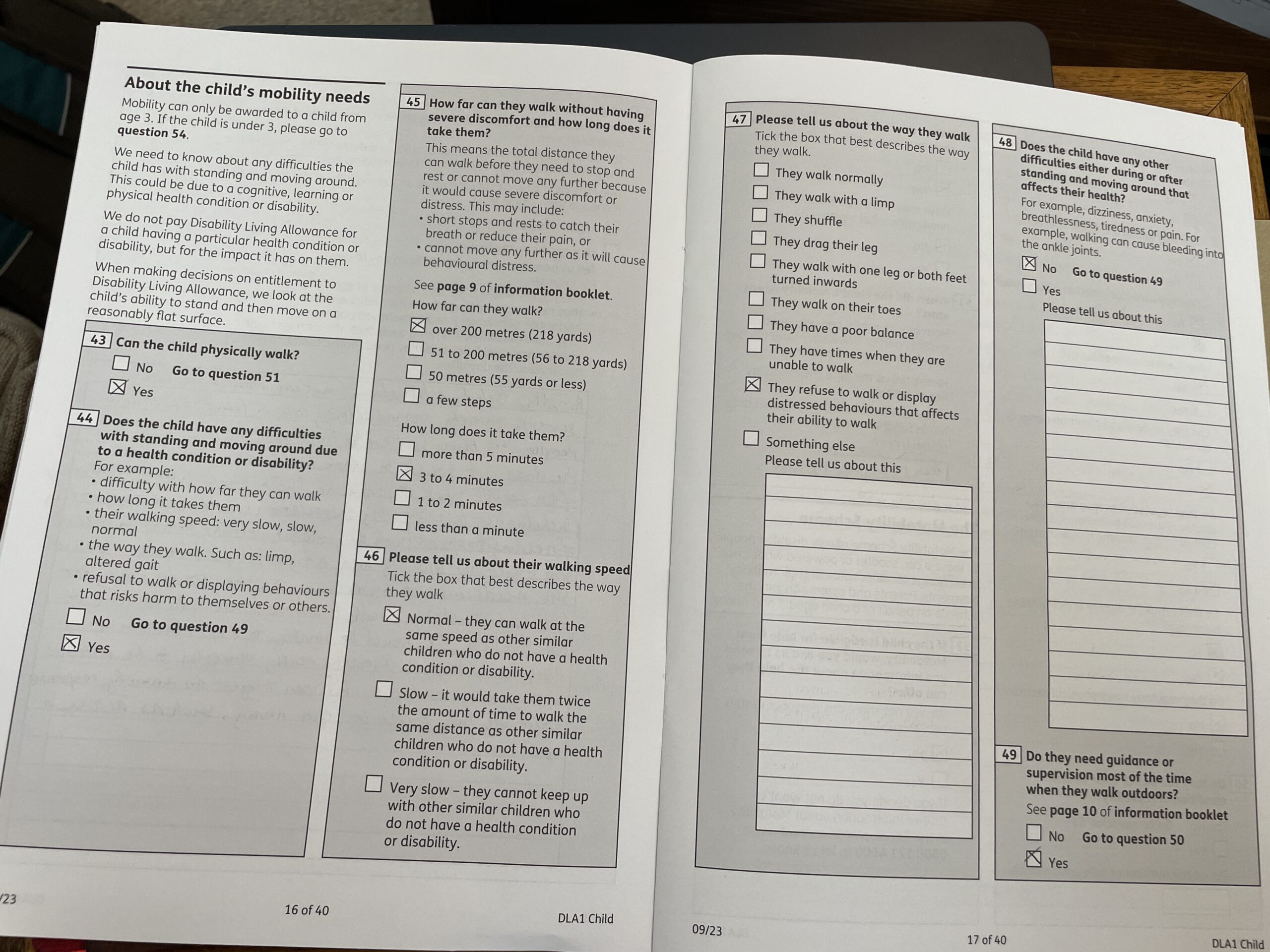
How to Apply and tips on completing your application
Call, don’t apply online – First: DO NOT APPLY ONLINE for disability benefits. Phone them up (number below) and request the paper form. If you do this and are awarded DLA, payment will be backdated to the date the form was requested. You have about 4 weeks to complete the paper form and submit it.
Disability Living Allowance helpline: 0800 121 4600
Start digitally – Draft your answers in a word document or on your phone. This allows you to easily add to the information, edit it and get your answers in order before finalising them on the paper form. Save this document and keep it; it will come in useful when you reapply in the future.
Phone notes – Keep a note on your phone. You will almost certainly be out and about and suddenly think of a relevant care need or incident that you should include. Write them down as they come up.
Focus on the bad – Describe your child on their worst day and focus on the times when things are hardest
Talk to friends in a similar situation – Talk it through with friends who have already applied; they will often be able to prompt you to include things you wouldn’t have thought to include
Include times – Where possible, give approximations of how long the extra care and supervision takes. For example: ‘In the mornings, getting dressed requires 1:1 support and takes from 20-30 minutes, due to overwhelm and distress’
Break down tasks/care – Remember, DLA looks at how much help your child needs compared to a child the same age. For each activity (eating, washing, toileting, mobility, behaviour, communication), think: – What steps are involved? – Which steps can they do? – Which steps do you have to do? – How long does it take? – What happens if you don’t help?
Spell it out – If your child has autism, ADHD, epilepsy, a genetic condition, or any other disability, don’t assume the assessor knows what that means for daily life. Spell it out to them.
Write as much as you need to – The boxes on the form are very small and you’re not expected to necessarily fit everything in. If you don’t have enough space, write “see additional sheet” and attach extra pages with your child’s name and NI number.
Consider including a diary – Keep a 3-7 day diary to include in your application. This is incredibly powerful evidence. Include: – Meltdowns or distress – Night waking – Toileting accidents – Refusal or inability to eat – Safety issues – How long tasks take – Any extra supervision needed You can attach this diary to the form.
– Explain the DLA form (long, detailed, but worth taking time). – Tips for describing your child’s needs on their worst days.
Emotional support counts too – Include emotional support, not just physical support. Emotional and behavioural needs count just as much as physical ones. Your child might need: – Constant reassurance – Help regulating emotions – Supervision to prevent harm – Support during anxiety or sensory overload
Night-time care – Make sure you list ANY night-time care. This is a major factor in higher-rate awards. Include: – How often they wake – How long they’re awake – What you have to do – Safety concerns – Impact on your sleep
What support have you put in place? – Think about adaptations you have had to make due to your child’s needs. You’re probably an expert at coping now and your children may be managing well BECAUSE of the extra support you’ve put in place. Think about what you do on a day to day basis to help your child cope. Examples might be using a visual timetable, running through the plan for the day to prepare them. Leaving early to allow extra time for dealing with difficulty getting them in to school.
Support from outside agencies – There are organisations that can support you in your application if needed. These include: – Citizens Advice – Contact (for families with disabled children) – Local SENDIASS
Keep copies – I cannot emphasise this enough. Once you have completed the paper form, take photos of every single page and save them. Applications can go missing in the post and it’s very useful to be able to look back on exactly what you wrote and which boxes you ticked. My first time applying for PIP, I did not do this and my application was lost in the post. I was absolutely devastated and cried when I found out I needed to do it again and I did not end up applying again for over a year.
Do consider seeking out emotional support from friends during the application process. It can feel very upsetting listing the ways in which your child is different and the extent of their care needs and seeing it all written down in black and white.
If you DO get awarded DLA, it can unlock a host of other support. Please see below and make sure you make further applications to get everything you are entitled to.
3. How DLA Affects Universal Credit
Reporting Your Child’s DLA Award
You must report the award to Universal Credit, you can do this by using the ‘Report a change’ link in your UC journal
This may increase your UC through: – The Disabled child element (lower or higher rate depending on the DLA level your child is awarded). – Possible Carer element if you are a recognised carer.
Why This Matters
Many families miss out on the increased UC award because they don’t report the DLA award promptly. These things can make a big difference financially, it’s well worth it!
4. Carer’s Allowance: Can You Claim It?
What Carer’s Allowance Is
This is a disability benefit for people who care for someone at least 35 hours a week, which you almost certainly do if you have a child with a disability who lives with you https://www.gov.uk/carers-allowance
Eligibility
In order to be eligible, you must earn under a certain threshold to be eligible for carer’s allowance
Your child must receive middle or high rate care DLA also
National Trust or Merlin concessions (this varies by location).
7. Days Out & Discounts Linked to DLA
Many attractions offer free carer entry with proof of DLA, it’s always worth checking.
8. Checklist: What to Do After Your Child Is Awarded DLA
Report this change to Universal Credit
Check your eligibility for Carer’s Allowance and apply if you are eligible.
Apply for:
A CEA Card
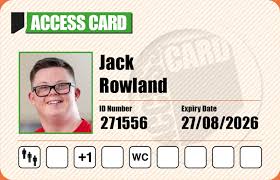
An Access Card
A Max Card
Request a Parent Carer’s Assessment.
Look into local support groups and charities
9. Conclusion
I hope this has gone some way to helping you make your application for disability benefits. It is not easy having a child with additional needs and there is financial help and support out there; if you are eligible, you are entitled to these disability benefits! It can make life that little bit easier and improve yours and your child’s quality of life.
You can do this!
A Parent’s Guide to Disability Benefits for Children: DLA, Carer’s Allowance, UC and More
Blog Post Outline: 1. Introduction: Why Discreet Chewy Jewellery Matters Chewy jewellery are purpose-made wearable items, made from food-grade silicone